Recipe Planning
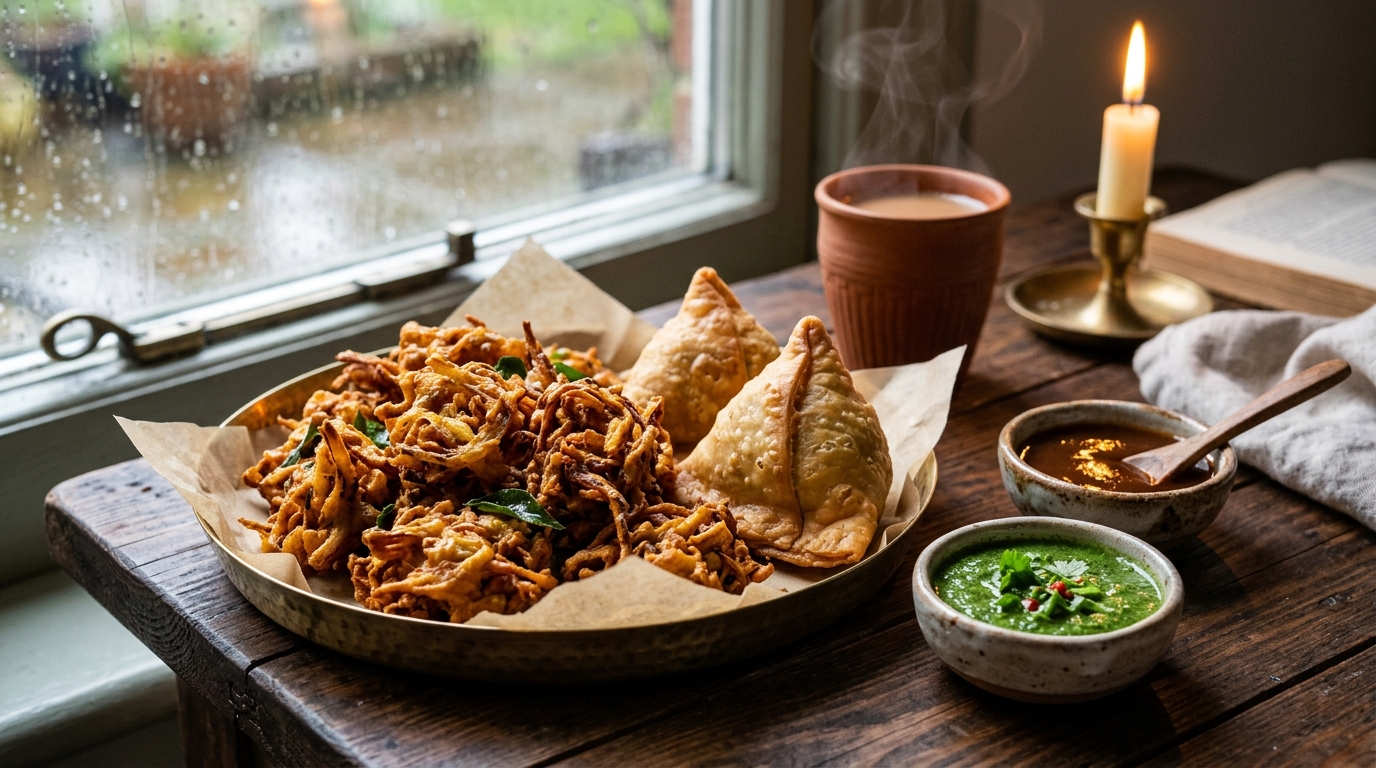
There is an unspoken culinary truth across the globe: when dark grey clouds roll in, thunderstorms rumble across the horizon, and the intoxicating earthy scent of petrichor rises from rain-soaked ground, ordinary meals simply will not do. Rainy days awaken a primal craving for sensory warmth: the audible crackle of bubbling oil, the comforting scent of toasted spices, the sharp tang of tamarind, and the soothing steam of hot spiced ginger chai.
In South Asian culinary culture and across the diaspora, monsoon season (*Barsaat*) is inextricably bound to the ritual of frying crisp pakoras and golden samosas. Yet, every home cook has experienced the disappointment of a botched batch: pakoras that emerge as heavy, grease-soaked sponges, or samosas with pale, flabby pastry that collapses before reaching the table. Achieving street-vendor perfection at home requires understanding simple food physics: starch hydration, oil temperature dynamics, and moisture control. This definitive monsoon cooking guide breaks down the culinary science of long-lasting crunch, essential chutney formulas, air-fryer alternatives, and a foolproof rainy weekend meal plan.
The food science of the ultimate shatter-crisp pakora
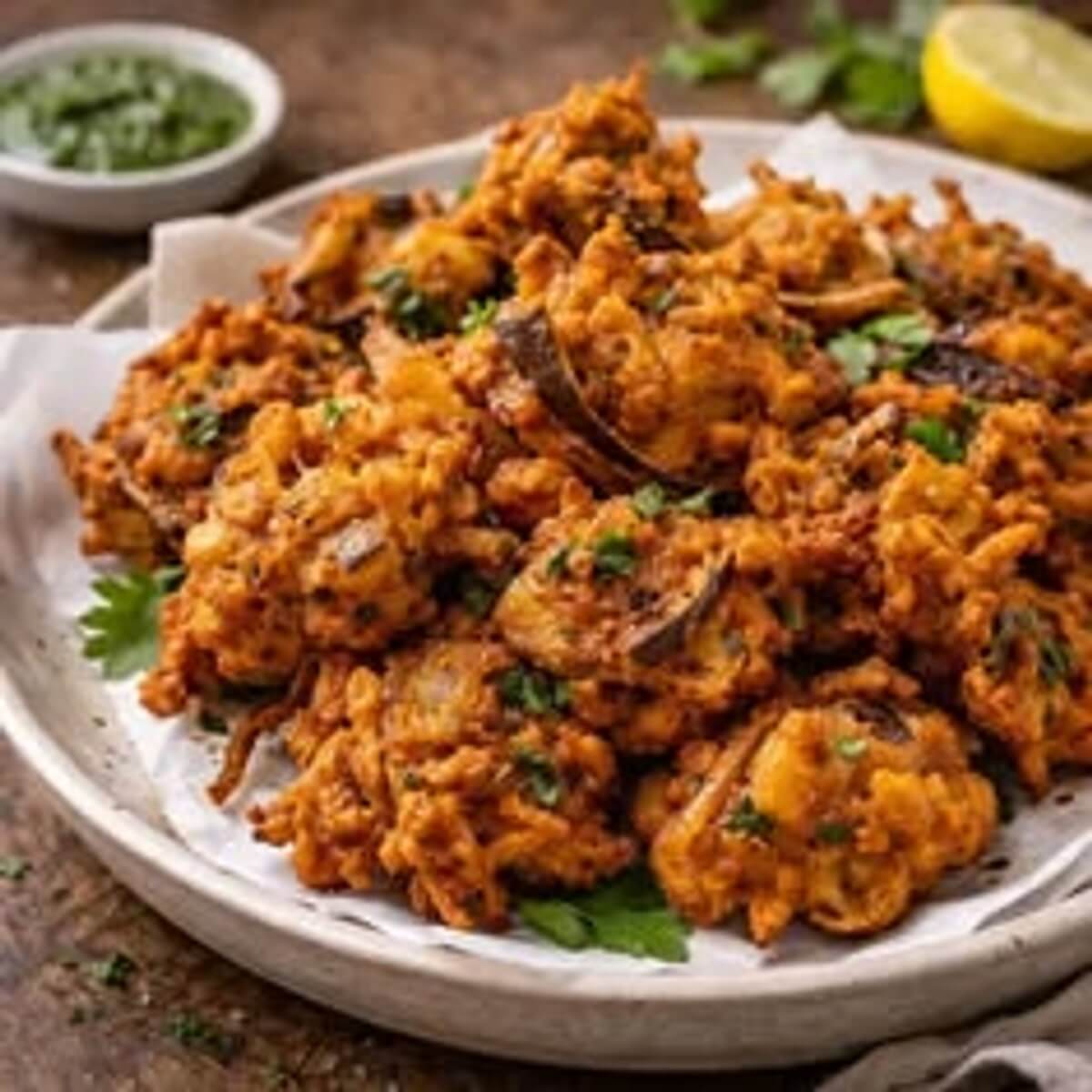
A truly magnificent pakora is light, jagged, deeply golden, and shatters audibly upon the first bite without leaving a slick film of heavy oil on your palate. Achieving this texture is a matter of starch ratios and temperature control.
1. Besan vs. standard chickpea flour: know the difference
In Western supermarkets, packages labeled "chickpea flour" are frequently milled from raw garbanzo beans (kabuli chana), which produces a coarse, gritty flour that can taste chalky. Authentic pakoras demand besan, which is milled from roasted, split brown chickpeas (Bengal gram or kala chana). Besan has a finer particle size, a sweeter nutty aroma, and a superior starch-protein matrix that forms a delicate, lace-like batter around vegetables.
2. The secret crunch weapon: rice flour or cornstarch
While besan provides flavor and structure, besan alone softens relatively quickly as the vegetables inside release moisture after frying. To engineer all-day crispness, always blend in 2 tablespoons of fine white rice flour (or cornstarch) for every 1 cup of besan. Rice flour has high amylose content, which gelatinizes into a rigid, non-porous exterior shield during frying. This barrier blocks oil from penetrating the interior while locking out ambient atmospheric humidity.
3. The "Moyen" emulsification trick
Before adding a drop of water to your dry flour blend, whisk in 1 tablespoon of smoking hot oil straight from your preheating frying pan. This traditional technique (known as adding *moyen*) micro-cooks the raw starch granules and coats protein molecules in fat. When the pakoras hit the hot oil, this internal fat layer vaporizes moisture instantly, yielding an astonishingly light, flaky, blistered crust.
4. Carbon dioxide micro-bubbles
Add a scant 1/4 teaspoon of baking soda to your dry mix. As the batter enters the 350°F (175°C) oil, the baking soda instantly reacts with heat and natural acids, releasing thousands of micro carbon-dioxide gas bubbles. These tiny gas pockets expand the batter, creating an airy honeycomb interior that prevents dense, rubbery centers.
Never, under any circumstances, drain freshly fried pakoras or samosas directly onto a flat plate lined with paper towels. The residual steam radiating from the bottom of the hot snack gets trapped against the paper, immediately condensation-steaming the underside into a soggy, limp mess. Always transfer hot fried snacks onto a raised wire cooling rack set over a baking sheet so circulating air keeps all sides crisp.
Mastering the three iconic pakora styles
1. Lachha onion bhaji (The street-style tangled onion pakora)
The finest onion pakoras do not use a pourable liquid batter. Instead, slice 2 large yellow onions paper-thin. Toss the sliced onions in a bowl with 1/2 teaspoon of salt, 1/2 teaspoon of turmeric, 1/2 teaspoon of Kashmiri chili powder, 1 teaspoon of crushed coriander seeds, and 1/2 teaspoon of carom seeds (ajwain). Let the onions sit for 10 minutes; the salt draws out the onion’s natural water. Sift in your besan and rice flour and massage with your fingers. The onion juice itself forms a sticky, shaggy coating without adding any water. Drop loose, tangled clusters into hot oil for ragged, hyper-crispy edges. For full mixed vegetable proportions, explore our mixed vegetable pakora.
2. Herbed aloo and palak pakoras
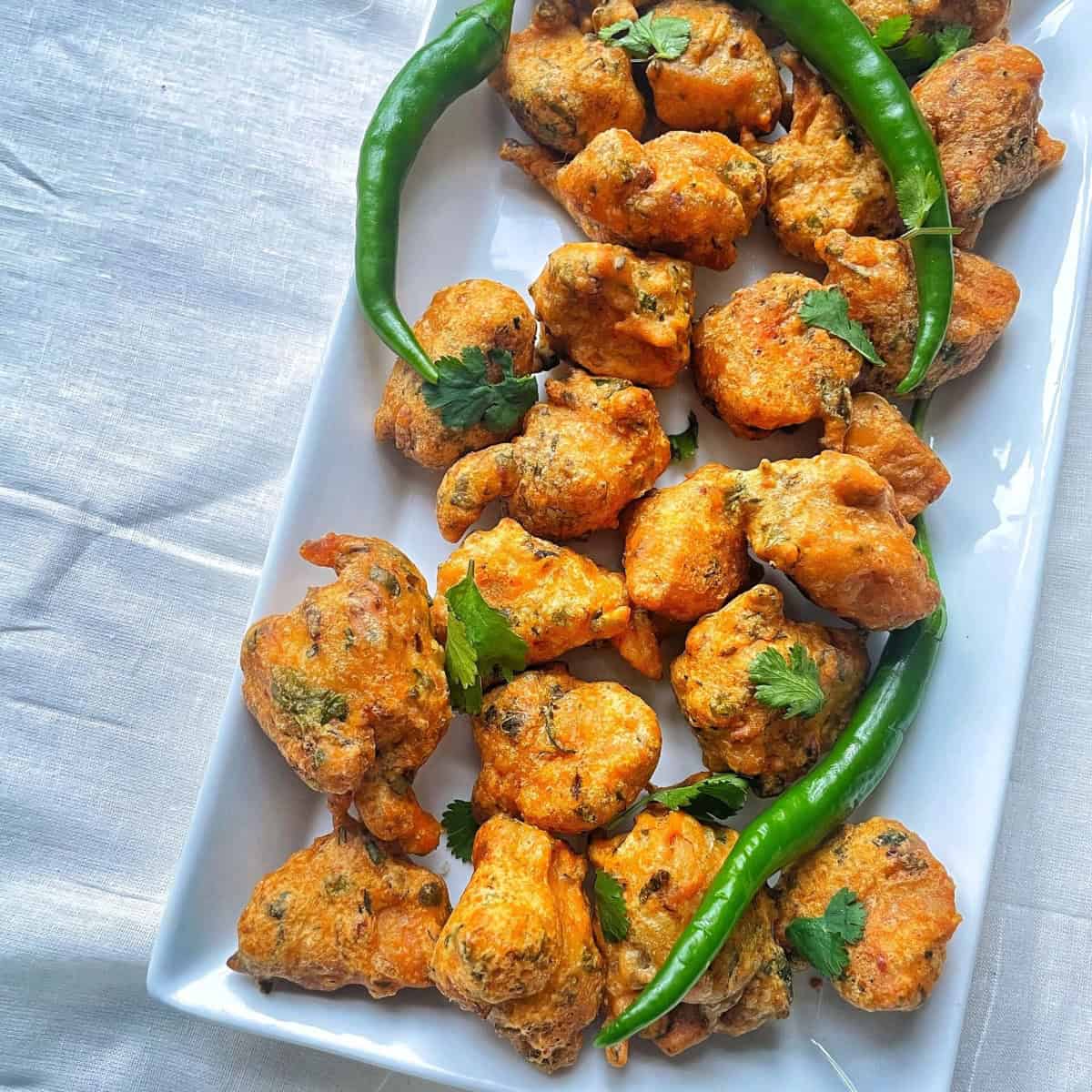
Thinly sliced potato rounds (cut on a mandoline to 1/8-inch thickness) and whole fresh baby spinach leaves create delightful textural contrast. Whisk besan, rice flour, ajwain, freshly grated ginger, minced green chilies, and cold water into a medium-thick batter that coats the back of a spoon. Dip the potato slices and spinach leaves, letting excess batter drip off, and fry for 4 minutes until golden. See our aloo pakora recipe for detailed step-by-step guidance.
3. Succulent spiced chicken pakoras
For meat lovers, boneless chicken thighs cut into bite-sized cubes deliver juicy tenderness that white breast meat cannot match. Marinate the chicken in ginger-garlic paste, lemon juice, chaat masala, and a dollop of yogurt for 30 minutes. Toss with seasoned besan and fry in medium-hot oil for 5 to 6 minutes until cooked through and crunchy. Check out our chicken pakora recipe for restaurant-style seasoning.
The samosa masterclass: flaky "Khasta" pastry and freezer prep
A premier samosa is defined by its crust (*khasta*): tender, crumbly, blistered with tiny micro-bubbles, and robust enough to hold a piping hot, savory filling without shattering in your hand.
The fat-to-flour rubbing technique
In a mixing bowl, combine 2 cups of all-purpose flour, 1/2 teaspoon of carom seeds (ajwain), and 1/2 teaspoon of salt. Drizzle in 4 tablespoons of melted warm ghee or oil. Rub the flour and fat between your palms for 3 to 4 minutes until the mixture resembles coarse breadcrumbs. When you squeeze a handful of flour in your fist, it should hold its shape firmly without crumbling. Add ice-cold water gradually (about 1/2 cup) to knead a very stiff, firm dough. A stiff dough absorbs virtually no oil during frying, guaranteeing a crisp shell. Rest the dough covered for 30 minutes.
The waxy potato filling secret
Boil 2 large potatoes until just tender. Crucial rule: coarsely crush the potatoes with your hands, never mash them into a purée. Sauté whole cumin seeds, crushed coriander seeds, ginger, green chilies, green peas, amchur (dry mango powder), and garam masala in a pan. Fold in the crushed potatoes. Cool the filling completely before wrapping; packing steaming hot filling into raw dough dissolves the dough fats and causes tears. Review our crispy potato samosa for assembly mechanics.
How to freeze samosas raw for up to 3 months
Assemble and seal your samosas firmly with a dab of water. Arrange them in a single layer on a parchment-lined baking sheet, ensuring they do not touch. Freeze for 3 hours until rock hard, then transfer into heavy-duty freezer bags. Frying from frozen: Never thaw frozen samosas before cooking. Drop frozen samosas directly into moderately hot oil (325°F / 160°C) and fry slowly for 10 to 12 minutes until deep golden brown.
The essential monsoon chutney trio
Hot fried snacks are hollow without contrasting dipping sauces that cut through rich oil with bright acid, fiery heat, and cooling sweetness.
| Chutney | Flavor Profile | Key Ingredients | Culinary Role |
|---|---|---|---|
| Green Chutney (Hari Chutney) | Bright, herbaceous, sharp heat | Fresh cilantro, mint leaves, green chilies, garlic, lemon juice, black salt | Cuts through fried starch; high vitamin C brightens the palate |
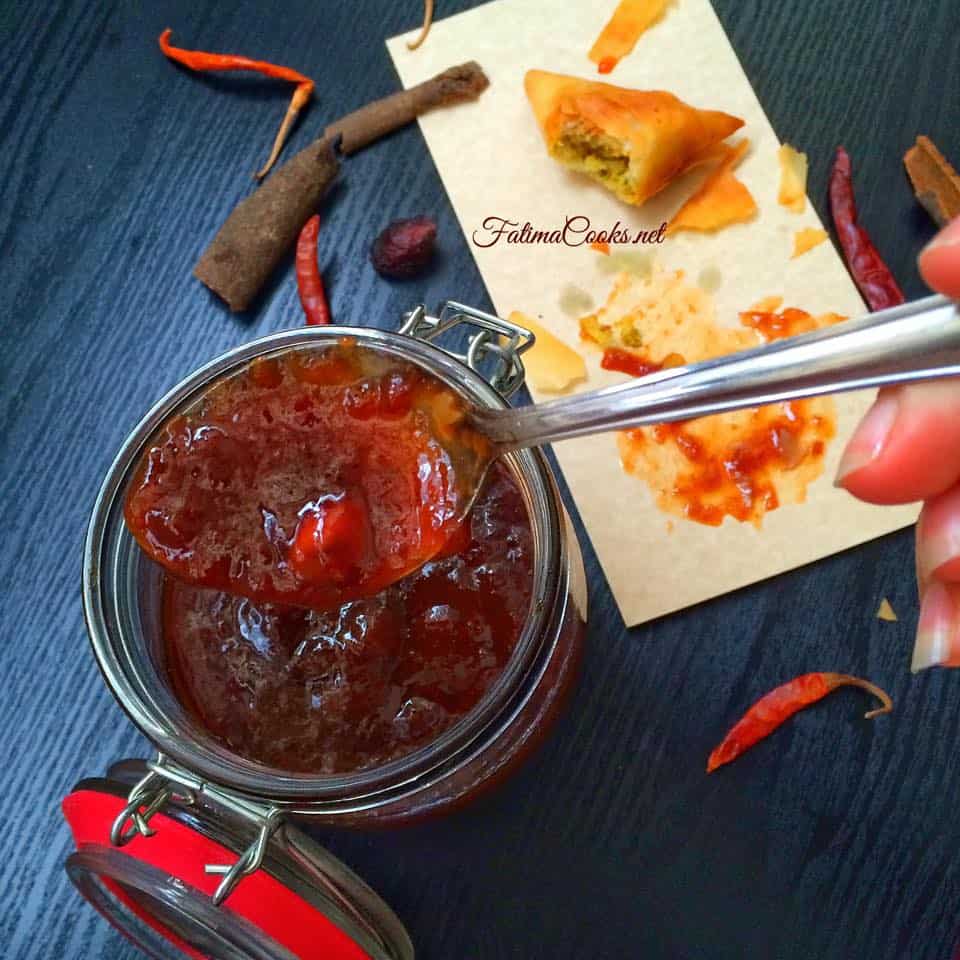
| Sweet Tamarind (Saunth) | Sweet, tangy, warming spice | Tamarind pulp, dark jaggery, ground ginger (sonth), roasted cumin, black salt | Deep caramelized sweetness balances spicy pakora batters |
| Aloo Bukhara Chutney | Fruity, tart, delicate sweetness | Dried plums (aloo bukhara), sugar, cardamom, melon seeds, vinegar | Traditional celebratory pairing; see our plum chutney recipe |
The healthier alternative: air-fryer and oven-baked pakoras
If you crave monsoon crunch on a busy Tuesday without deep-frying cleanup or excess calories, the air fryer is a remarkably capable substitute:
- Mix your onion and vegetable pakora batter slightly stiffer than standard frying consistency so it holds its shape.
- Preheat your air fryer to 375°F (190°C) for 3 minutes. Line the basket with perforated parchment paper.
- Drop golf-ball-sized clusters into the basket, leaving 1 inch of space between each. Spray generously with high-smoke-point avocado oil spray.
- Air fry for 12 to 14 minutes, flipping halfway through and applying another light mist of oil spray, until golden and crunchy.
The rainy weekend meal plan
| Timeline | Kitchen Activity | Prep & Cooking Tasks |
|---|---|---|
| Saturday Morning (Prep) | Chutney blending & samosa filling | Blend green mint and tamarind chutneys; boil, season, and cool potato-pea filling. |
| Saturday Afternoon | Samosa assembly & batch freezing | Roll dough, assemble 16 samosas; freeze 10 raw for later and reserve 6 for lunch. |
| Saturday Evening (The Feast) | Pakora fry & karak chai | Fry fresh lachha onion bhajis and vegetable pakoras; brew cardamom ginger chai. |
| Sunday Lunch | Crispy samosa chaat platter | Crush fried samosas into shallow bowls, top with warm chickpeas, chutneys, and yogurt. |
What fails: 5 common monsoon snack mistakes
- Frying at low oil temperatures: If your oil drops below 340°F (170°C), the starch barrier cannot form instantly. The batter acts as a sponge, absorbing copious amounts of oil and producing limp, greasy, nausea-inducing snacks. Use a clip-on kitchen thermometer and maintain oil between 350°F and 365°F (175°C to 185°C).
- Crowding the frying vessel: Dropping 10 pakoras at once into a home Dutch oven or kadai causes the oil temperature to plunge by 50°F instantly. Fry in disciplined small batches of 4 to 5 pieces at a time.
- Making batter too watery: A runny batter slides off vegetables and pools into thin, burnt pancakes in the pan. Batter should be thick, sticky, and paste-like, clinging tightly to onion slices.
- Microwaving leftover fried food: Microwaving agitates water molecules inside the snack, turning moisture into steam that softens crusts from within. Reheat leftover pakoras and samosas in a 375°F (190°C) toaster oven or air fryer for 4 to 6 minutes to restore glass-like crunch.
- Adding baking soda with a heavy hand: More than 1/4 teaspoon of baking soda per cup of flour will impart an unpleasant metallic, soapy aftertaste and cause pakoras to darken prematurely before the interior vegetables are cooked.
Frequently asked questions
Why do my pakoras turn soggy within 15 minutes of frying?
Sogginess is caused by internal moisture migration. As the water inside vegetables turns to steam during frying, it seeks an exit route. If you drain fried pakoras on paper towels, that escaping steam gets trapped against the underside, condensing into moisture that ruins the crust. Always drain on a raised wire cooling rack. Adding 2 tablespoons of rice flour to your besan also builds a firmer starch wall that resists steam absorption.
What is the best oil for deep-frying pakoras and samosas?
Choose high-smoke-point, neutral-flavored vegetable oils such as peanut oil, sunflower oil, canola oil, or light olive oil. For authentic rustic Punjabi and Bengali flavor profiles, traditional cooks frequently fry in pure mustard oil (*sarson ka tel*), heating it to the smoking point first to mellow its raw pungency before adding the pakoras.
Can I make pakora batter ahead of time?
You can mix your dry dry-flour blend (besan, rice flour, spices, salt) days in advance and keep it in a sealed jar. However, never add water or sliced vegetables to the batter hours ahead. Onions and vegetables continuously weep water when salted, which will thin out your batter into an unworkable liquid puddle. Only mix wet ingredients and vegetables 5 minutes before frying.
How do I scale ingredients when cooking snacks for a rainy day gathering?
Use our interactive servings scaler to automatically calculate flour, vegetable, and spice ratios for crowd-sized parties. To assemble your complete pantry and spice run efficiently, organize your items with the grocery list generator and explore complementary dinner ideas with the meal plan generator.