Recipe Planning
Virtually every crash diet on the internet works through the exact same mechanism: forcing a severe caloric deficit through extreme restriction. You cut out all carbohydrates, eliminate entire food groups, or drink liquids for a week. Weight drops rapidly on the scale, but up to half of that lost weight is water and metabolically active lean muscle tissue. Within weeks, hunger hormones (ghrelin) skyrocket, satiety hormones (leptin and peptide YY) plummet, resting metabolic rate slows, and overwhelming biological cravings trigger rebound overeating.
True, permanent weight management relies on an entirely different physiological paradigm: high-satiety volumetric nutrition. When you construct meals around lean proteins, viscous dietary fiber, and high-water-content vegetables, you physically distend gastric stretch receptors and stimulate satiety signaling in the brain, while naturally reducing overall caloric density. You eat generous, satisfying plates of food, maintain stable blood sugar, protect your lean muscle mass, and eliminate the gnawing hunger that ruins traditional diets. This comprehensive 7-day weight loss meal plan shows you exactly how to structure your week for sustainable, long-term success.
Important: This guide is for general meal-planning ideas, not medical advice. If you have underlying health conditions, take prescription medications, are pregnant, or have a history of disordered eating, consult your physician or a registered dietitian before changing your eating pattern.
The physiological science of high-satiety fat loss
To lose adipose fat while preserving lean tissue and preventing metabolic slowdown, engineer your daily meals around three proven biological principles:
- The Protein Leverage Effect: Pioneered by nutritional ecologists Drs. David Raubenheimer and Stephen Simpson, the Protein Leverage Hypothesis demonstrates that the human body has a strong biological drive to consume a specific target amount of protein each day. If your diet is low in protein and high in ultra-processed fats and refined starches, you will continue eating excess calories until your protein requirement is satisfied. By anchoring every meal with 25 to 35 grams of lean protein, you satisfy this primal drive early, naturally blunting cravings for excess calories.
- Volumetric Density & Gastric Distension: Your stomach does not count calories; it senses volume and weight through mechanoreceptors in the gastric wall. Consuming foods with high water and fiber content (leafy greens, crucifers, zucchini, broth-based soups) fills the stomach cavity, triggering the vagus nerve to signal the hypothalamus that you are full, all while delivering minimal net calories.
- The Thermic Effect of Food (TEF): Digesting, absorbing, and assimilating macronutrients requires metabolic energy. Protein has a massive thermic effect of approximately 20% to 30% (meaning that for every 100 calories of protein consumed, your body expends 20 to 30 calories just processing it), compared to only 5% to 10% for carbohydrates and 0% to 3% for dietary fats. Prioritizing lean protein naturally elevates daily energy expenditure.
7-Day weight loss meal plan
This 7-day schedule provides generous, high-protein dinners designed to keep you full and energized throughout the evening. Adjust portions easily for your family using our free servings scaler.
| Day | Breakfast | Lunch | Dinner | Satiety & Volume Strategy |
|---|---|---|---|---|
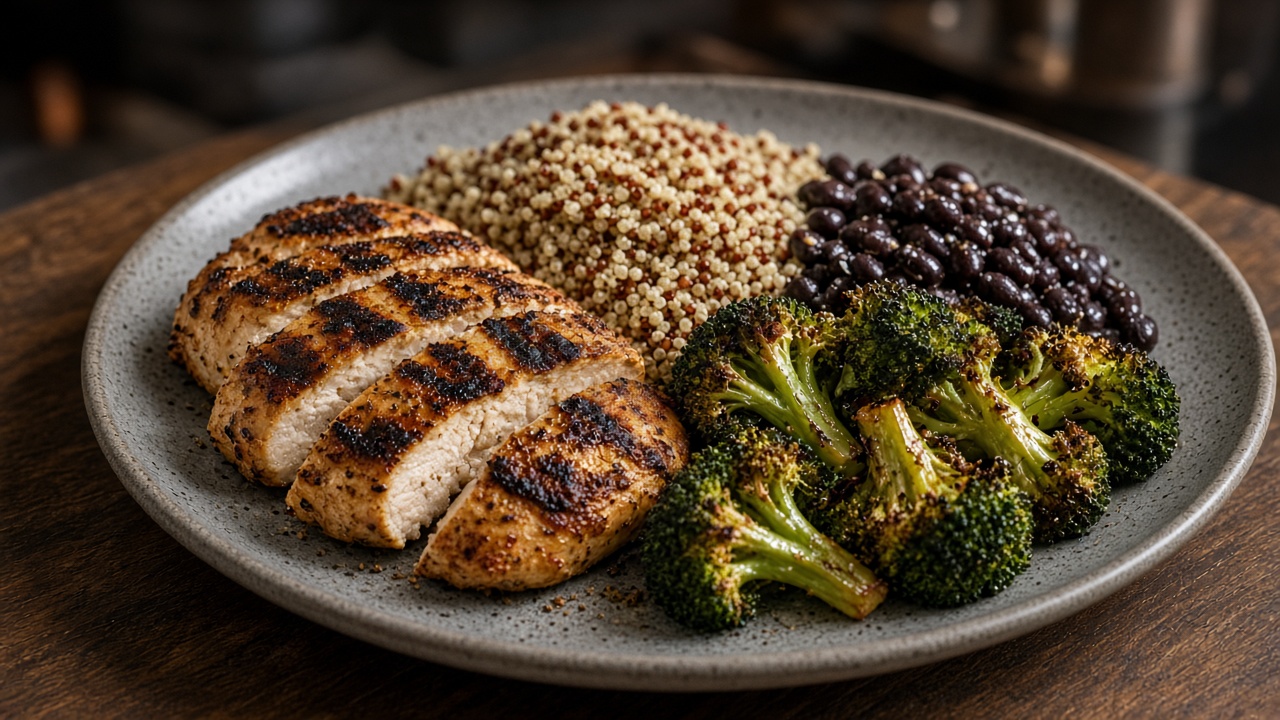
| Monday | Veggie scramble with 2 eggs, 1/2 cup egg whites, sautéed spinach, mushrooms, and 1 slice whole-grain toast | Mediterranean salad: pre-cooked quinoa, canned wild salmon, cucumbers, cherry tomatoes, and olive oil vinaigrette | Juicy lemon herb chicken with roasted broccoli and 1/2 baked sweet potato | Egg whites boost protein volume with zero extra fat; broccoli fiber and sweet potato provide sustained evening fullness. |
| Tuesday | Plain low-fat Greek yogurt parfait with cinnamon, 1 tbsp chia seeds, and fresh blueberries | Leftover lemon herb chicken sliced over mixed garden greens with shredded carrots and lemon dressing | Vibrant vegetable stir-fry with tofu over cauliflower rice and brown rice | Cauliflower rice blended 50/50 with brown rice doubles plate volume while cutting starch calories in half. |
| Wednesday | Overnight rolled oats soaked in unsweetened almond milk with vanilla protein powder, chia, and raspberries | Leftover vegetable tofu stir-fry with a hard-boiled egg for extra satiety | Light, crunchy turkey lettuce wraps with water chestnuts, diced mushrooms, and ginger | Crisp butterhead lettuce wraps replace flour tortillas, saving 200 empty calories while delivering refreshing crunch. |
| Thursday | Two poached eggs over mashed avocado on sprouted whole-grain toast with red pepper flakes | Turkey lettuce wrap filling served over pre-cooked quinoa as a savory grain bowl | Flaky herb-baked salmon with roasted asparagus and steamed green beans | Salmon delivers healthy marine omega-3s; double green vegetables maximize gastric volume. |
| Friday | High-protein chia pudding: chia seeds, unsweetened soy milk, collagen, and crushed raw walnuts | Leftover herb-baked salmon flaked over a large mixed green salad with pumpkin seeds | Comforting hearty lentil soup with a side of steamed spinach and lemon | Lentils provide viscous soluble fiber and resistant starch that sustains satiety for 4+ hours. |
| Saturday | Omelet with diced red bell peppers, baby spinach, red onion, and 1 ounce of crumbled goat cheese | Chilled mediterranean quinoa salad with canned chickpeas and fresh parsley | Grilled lean sirloin steak or bison cutlet with roasted Brussels sprouts and mashed garlic cauliflower | High bioavailable iron and zinc; cauliflower mash provides comforting potato-like texture with 70% fewer calories. |
| Sunday | Protein pancakes made from egg whites, banana, and rolled oat flour, topped with warm strawberries | Leftover grilled steak sliced over a bed of spinach, roasted sweet peppers, and walnuts | Sheet-pan baked chicken breasts with roasted carrots, Brussels sprouts, and butternut squash | Sunday batch-prep friendly; colorful carotenoids and magnesium supporting metabolic recovery. |
Smart snacking: stopping emotional and late-night hunger
Snacks should not be mindless nibbles of ultra-processed crackers; they should serve as strategic bridges between meals. When genuine physical hunger strikes, select snacks that combine protein and dietary fiber:
- Low-Fat Cottage Cheese with Blueberries: 1/2 cup delivers 14 grams of slow-digesting micellar casein protein, preventing muscle catabolism.
- Celery Sticks with Natural Peanut Butter: Provides crunchy water volume paired with monounsaturated fats.
- Hard-Boiled Egg with Smoked Paprika: 6 grams of complete protein in a portable, zero-carbohydrate package.
- Air-Popped Popcorn Sprinkled with Nutritional Yeast: Delivers 4 grams of whole-grain fiber per 3-cup serving with cheesy umami flavor for under 100 calories.
What fails: 5 mistakes that sabotage weight loss plans
- Drinking liquid calories: Specialty lattes, bottled fruit smoothies, sweet teas, and alcohol provide hundreds of calories with zero mastication and minimal satiety signaling. Your brain fails to register liquid carbohydrates in the same way as solid food, leading to uncompensated calorie consumption. Drink water, sparkling water, black coffee, or herbal tea.
- Eyeballing cooking oils and salad dressings: While extra virgin olive oil is extraordinarily healthy, it is the most calorically dense substance on earth (120 calories per single tablespoon). Drizzling oil straight from the bottle into the pan can easily add 300 to 400 uncounted calories to an otherwise lean dinner. Measure your cooking oil with a teaspoon.
- Slashing calories too aggressively: Dropping your daily intake below your basal metabolic rate (BMR) triggers adaptive thermogenesis: your thyroid downregulates, spontaneous non-exercise activity thermogenesis (NEAT) plummets, and your body actively conserves fat stores. Aim for a modest, sustainable deficit of 300 to 500 kcal below maintenance.
- Neglecting sleep and chronic stress: Chronic sleep restriction (less than 7 hours) raises circulating cortisol and ghrelin while suppressing leptin. Sleep-deprived individuals statistically consume an extra 300 to 400 calories of carbohydrate-dense snacks daily due to prefrontal cortex impairment. Protect your 8 hours of sleep.
- Adopting an "all-or-nothing" perfectionist mindset: Having a slice of birthday cake or a restaurant dinner does not ruin your progress. The only mistake is allowing one off-plan meal to turn into an off-plan weekend. Practice unconditional self-compassion, return immediately to your next planned meal, and maintain consistency.
Frequently asked questions
How much weight is safe and realistic to lose per week?
Clinical guidelines recommend targeting a rate of 0.5 to 2 pounds (0.25 to 1 kg) per week, or roughly 0.5% to 1% of your total body weight weekly. Losing at this measured pace ensures that the weight lost comes predominantly from adipose tissue rather than skeletal muscle or bone mineral density.
Do I have to eliminate carbohydrates to lose weight?
No. Extensive randomized clinical trials (such as the DIETFITS study) have conclusively demonstrated that when calories and protein are equated, low-carbohydrate diets and low-fat diets produce virtually identical fat loss outcomes over 12 months. The best diet is the one that you can sustain for years without feeling miserable. Complex, high-fiber whole carbohydrates belong on your plate.
How can I prevent metabolic slowdown during weight loss?
To preserve your resting metabolic rate, prioritize three evidence-based strategies: consume at least 1.6 grams of protein per kilogram of body weight daily, engage in progressive resistance training 3 to 4 times per week to signal muscle retention, and incorporate periodic "diet breaks" at maintenance calories every 8 to 12 weeks.
How can I build an automated weekly weight loss meal plan?
Take the daily friction out of healthy eating by using our free digital kitchen suite. Use our meal plan generator to create calorie-conscious recipes, export your ingredients into an aisle-organized shopping trip with our grocery list generator, and discover creative dinners for your pantry staples with our leftover finder.